







Preparation And Storage


Product Notices
- This reagent has been pre-diluted for use at the recommended Volume per Test. We typically use 1 × 10^6 cells in a 100-µl experimental sample (a test).
- Source of all serum proteins is from USDA inspected abattoirs located in the United States.
- An isotype control should be used at the same concentration as the antibody of interest.
- Please refer to www.bdbiosciences.com/us/s/resources for technical protocols.
- The Alexa Fluor®, Pacific Blue™, and Cascade Blue® dye antibody conjugates in this product are sold under license from Molecular Probes, Inc. for research use only, excluding use in combination with microarrays, or as analyte specific reagents. The Alexa Fluor® dyes (except for Alexa Fluor® 430), Pacific Blue™ dye, and Cascade Blue® dye are covered by pending and issued patents.
- Alexa Fluor® is a registered trademark of Molecular Probes, Inc., Eugene, OR.
- Alexa Fluor® 647 fluorochrome emission is collected at the same instrument settings as for allophycocyanin (APC).
- Caution: Sodium azide yields highly toxic hydrazoic acid under acidic conditions. Dilute azide compounds in running water before discarding to avoid accumulation of potentially explosive deposits in plumbing.
- For fluorochrome spectra and suitable instrument settings, please refer to our Multicolor Flow Cytometry web page at www.bdbiosciences.com/colors.
Companion Products

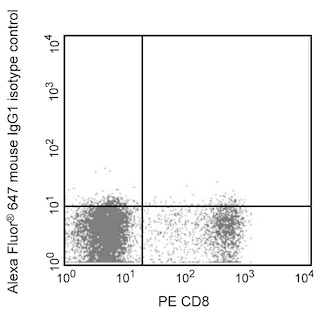
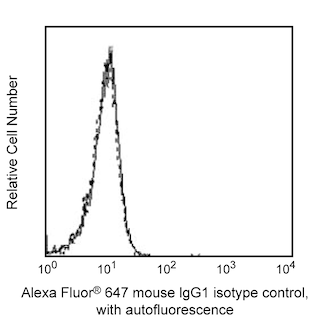
The Bcl-2/100 monoclonal antibody specifically binds to human Bcl-2. It has been reported not to crossreact with mouse Bcl-2. A synthetic peptide corresponding to amino acids 41-54 (GAAPAPGIFSSQPG) of human Bcl-2 was used as the immunogen. This peptide sequence reportedly is not conserved between human and mouse. Programmed cell death (apoptosis) is a normal physiologic process which occurs during embryonic development as well as in maintenance of tissue homeostasis. The apoptotic program is characterized by certain morphological features. These include changes in the plasma membrane such as loss of membrane asymmetry and attachment, a condensation of the cytoplasm and nucleus, and internucleosomal cleavage of DNA. In the final stages, the dying cells become fragmented into "apoptotic bodies" which are rapidly eliminated by phagocytic cells without eliciting significant inflammatory damage to surrounding cells. Members of the Bcl-2 family play a major role in regulating the response of cells to apoptotic signals. Bcl-2 is considered to be novel among proto-oncogenes because it blocks apoptosis in many cell types. Bcl-2 is thought to provide selective survival advantage for cells by blocking apoptosis and thus may contribute to tumorigenesis. Bcl-2 is an approximately 26 kDa intracellular, integral membrane protein found primarily in the nuclear envelope, endoplasmic reticulum and outer mitochondrial membrane.
Development References (7)
-
Krajewski S, Tanaka S, Takayama S, Schibler MJ, Fenton W, Reed JC. Investigation of the subcellular distribution of the bcl-2 oncoprotein: residence in the nuclear envelope, endoplasmic reticulum, and outer mitochondrial membranes. Cancer Res. 1993; 53(19):4701-4714. (Biology). View Reference
-
Pezzella F, Jones M, Ralfkiaer E, Ersbøll J, Gatter KC, Mason DY. Evaluation of bcl-2 protein expression and 14;18 translocation as prognostic markers in follicular lymphoma. Br J Cancer. 1992; 65(1):87-89. (Clone-specific: Immunohistochemistry). View Reference
-
Pezzella F, Tse AG, Cordell JL, Pulford KA, Gatter KC, Mason DY. Expression of the bcl-2 oncogene protein is not specific for the 14;18 chromosomal translocation. Am J Pathol. 1990; 137(2):225-232. (Immunogen: Immunohistochemistry, Western blot). View Reference
-
Pezzella F, Turley H, Kuzu I, et al. bcl-2 protein in non-small-cell lung carcinoma. N Engl J Med. 1993; 329(10):690-694. (Clone-specific: Immunohistochemistry). View Reference
-
Reed JC, Meister L, Tanaka S, et al. Differential expression of bcl2 protooncogene in neuroblastoma and other human tumor cell lines of neural origin. Cancer Res. 1991; 51(24):6529-6538. (Biology). View Reference
-
Tanaka S, Saito K, Reed JC. Structure-function analysis of the Bcl-2 oncoprotein. Addition of a heterologous transmembrane domain to portions of the Bcl-2 beta protein restores function as a regulator of cell survival. J Biol Chem. 1993; 268(15):10920-10926. (Biology). View Reference
-
Williams GT. Programmed cell death: apoptosis and oncogenesis. Cell. 1991; 65(7):1097-1098. (Biology). View Reference
Please refer to Support Documents for Quality Certificates
Global - Refer to manufacturer's instructions for use and related User Manuals and Technical data sheets before using this products as described
Comparisons, where applicable, are made against older BD Technology, manual methods or are general performance claims. Comparisons are not made against non-BD technologies, unless otherwise noted.
For Research Use Only. Not for use in diagnostic or therapeutic procedures.
