The site is undergoing maintenance. Ordering can continue through fax and phone.
Sunday, August 16, 2026, 12:30 - 3:30 pm (CEST).
If you encounter problems while ordering. Please contact us at BDBCustomerService@bd.com
See More
The site is undergoing maintenance. Ordering can continue through fax and phone.
Sunday, August 16, 2026, 12:30 - 3:30 pm (CEST).
If you encounter problems while ordering. Please contact us at BDBCustomerService@bd.com
See MoreThe site is undergoing maintenance. Ordering can continue through fax and phone.
Sunday, August 16, 2026, 12:30 - 3:30 pm (CEST)
.If you encounter problems while ordering. Please contact us at BDBCustomerService@bd.com
This page has been recently translated and is available in French now.
Looks like you're visiting us from {countryName}.
Would you like to stay on the current location site or be switched to your location?
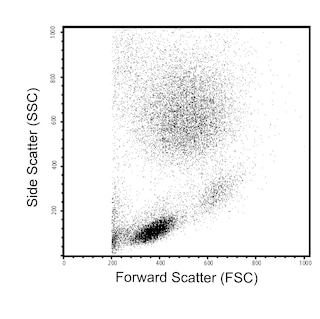
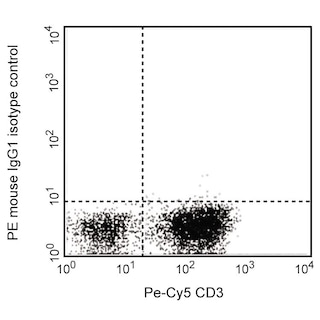
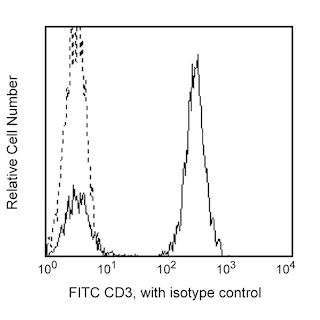
Multicolor flow cytometric analysis of CD96 expression on human peripheral blood lymphocytes. Human peripheral whole blood was stained with FITC Mouse Anti-Human CD3 (Cat. No. 555332) and with either PE Mouse IgG1 Kappa Isotype Control (Cat. No. 554680; Left Panel) or PE Mouse Anti-Human CD96 (Cat. No. 562379; Right Panel) followed by treatment with BD Pharm Lyse™ Lysing Buffer (Cat. No. 555899). Two-color flow cytometric contour plots showing the expression of CD3 versus CD96 (or Ig Isotype Control staining) were derived for gated events with the forward- and side-light scattering characteristics of viable lymphocytes using BD FACSDiva™ Software v. 6.1.3. Flow cytometry was performed using a BD LSRFortessa™ Flow Cytometer System.
Any use of products other than the permitted use without the express written authorization of Becton, Dickinson and Company is strictly prohibited.
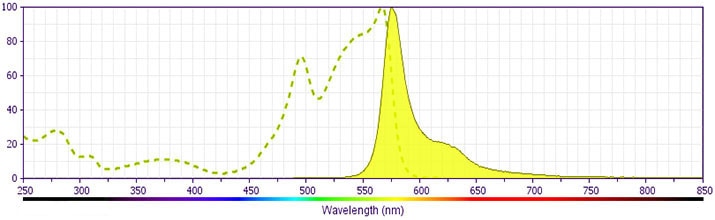
The 6F9 monoclonal antibody specifically binds to human CD96, also known as TACTILE (T cell activation increased late expression). CD96 is a type I transmembrane glycoprotein and member of the Ig superfamily. CD96 is expressed at low levels on resting natural killer (NK) cells and T cells and at high levels on activated NK and T cells. CD96 is also expressed on some T-cell leukemia and acute myeloid leukemia cells. CD96 may serve as a marker for acute myelogenous leukemia stem cells. CD96 plays a role in the adhesive interactions of activated NK and T cells during immune responses. CD96 binds to the poliovirus receptor (CD155) that is highly expressed by some tumor cells. CD155-mediated ligation of CD96 can induce NK cell-mediated cytotoxicity. CD96-mediated uptake of CD155 may adversely affect NK cells and thus reduce their effectiveness in anti-tumor responses.
Please refer to Support Documents for Quality Certificates
Global - Refer to manufacturer's instructions for use and related User Manuals and Technical data sheets before using this products as described
Comparisons, where applicable, are made against older BD Technology, manual methods or are general performance claims. Comparisons are not made against non-BD technologies, unless otherwise noted.
For Research Use Only. Not for use in diagnostic or therapeutic procedures.