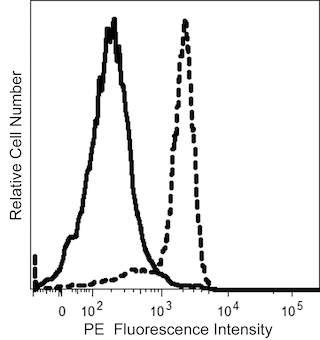
The MHN3-21 monoclonal antibody specifically binds to an extracellular domain of human Notch3. Notch3 is a type 1 transmembrane glycoprotein receptor and member of the Notch family that includes Notch1-Notch4. The Notch3 precursor is cleaved in the Golgi and presents as a cell surface heterodimeric receptor. The Notch3 receptor can bind to several membrane-bound ligands including Jagged1, Jagged2 and Delta1. Upon ligand binding, Notch3 undergoes proteolytic cleavage that results in the release of the Notch intracellular domain, NICD. NICD translocates to the nucleus where it can form a transcriptional activator complex with various transcription factors. These multimeric complexes either positively or negatively regulate the expression of multiple genes including those that orchestrate many facets of embryonic development and the subsequent functioning of organ systems such as the hematopoietic, immune, nervous and cardiovascular systems. Notch3 is reportedly expressed by monocytes but not by CD34+ cells and most types of normal lymphocytes. Notch3 has also been implicated in the development of T cell neoplasia. Notch3 is expressed in vascular smooth muscle cells and plays a key role in neural development. Mutations in Notch3 have been identified as the underlying cause of CADASIL, a cerebral autosomal dominant disease that is the most common form of hereditary stroke disorder.
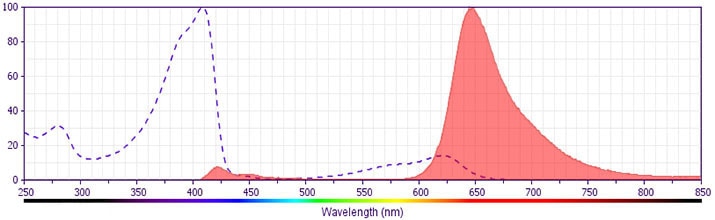
The antibody was conjugated to BD Horizon™ BV650 which is part of the BD Horizon Brilliant™ Violet family of dyes. This dye is a tandem fluorochrome of BD Horizon BV421 with an Ex Max of 405-nm and an acceptor dye with an Em Max at 650-nm. BD Horizon BV650 can be excited by the violet laser and detected in a filter used to detect APC-like dyes (eg, 660/20-nm filter). Due to the excitation and emission characteristics of the acceptor dye, there will be spillover into the APC and Alexa Fluor® 700 detectors. However, the spillover can be corrected through compensation as with any other dye combination.