The 390 monoclonal antibody specifically binds to CD31, also known as PECAM-1 (platelet endothelial cell adhesion molecule). CD31 is a ~130 kDa integral membrane glycoprotein, a member of the immunoglobulin superfamily, that mediates homophilic and heterophilic cell-cell adhesion. CD31 is expressed constitutively on the surface of adult and embryonic endothelial cells and is weakly expressed on many peripheral leukocytes and platelets. It has also been detected on bone marrow-derived hematopoietic stem cells and embryonic stem cells. CD31 is involved in the transendothelial emigration of neutrophils, and neutrophil PECAM-1 appears to be down-regulated after extravasation into inflamed tissues. Multiple alternatively spliced isoforms are detected during early post-implantation embryonic development; this alternative splicing is involved in regulation of ligand specificity. CD38 and vitronectin receptor (αvβ3 integrin, CD51/CD61) are proposed to be ligands for CD31. CD31-mediated endothelial cell-cell interactions are involved in angiogenesis. The 390 mAb inhibits a variety of in vitro and in vivo functions mediated by CD31.
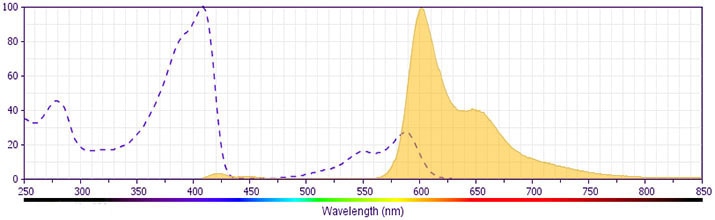
This antibody is conjugated to BD Horizon™ BV605 which is part of the BD Horizon Brilliant™ Violet family of dyes. With an Ex Max of 407-nm and Em Max of 602-nm, BD Horizon BV605 can be excited by a violet laser and detected with a standard 610/20-nm filter set. BD Horizon BV605 is a tandem fluorochrome of BD Horizon BV421 and an acceptor dye with an Em max at 605-nm. Due to the excitation of the acceptor dye by the green (532 nm) and yellow-green (561 nm) lasers, there will be significant spillover into the PE and BD Horizon PE-CF594 detectors off the green or yellow-green lasers. BD Horizon BV605 conjugates are very bright, often exhibiting brightness equivalent to PE conjugates and can be used as a third color off of the violet laser.