The TY25 monoclonal antibody specifically binds to CD273, also known as B7-DC or PD-L2. CD273 is a 42-kDa type I membrane glycoprotein encoded by the Pdcd1lg2 gene of the B7 family of the Ig superfamily. Pdcd1lg2 mRNA is expressed selectively in dendritic cells (DC), liver, and a few transformed cell lines (hepatic, neuroblastoma, and myeloid), but not in lymphoid tissues or macrophages. The protein has not been detected on resting peripheral T and B lymphocytes, macrophages, or DC, but it is upregulated upon activation of T cells, macrophages, and DC by a variety of stimulatory factors. B7-DC's receptor, PD-1, contains an ITIM (Immunoreceptor Tyrosine-based Inhibitory Motif) on its intracytoplasmic region and is expressed on activated B and T lymphocytes, suggesting that B7-DC-PD-1 interaction may be involved in the negative regulation of immune responses. The second PD-1 ligand, B7-H1 (PD-L1), is also a member of the B7 family of the Ig superfamily. B7-DC may also participate in positive immunoregulation, or costimulation of T cells, through an additional receptor, which is not PD-1 and distinct from the alternate receptor for B7-H1. Moreover, B7-DC is the first B7 ligand that has been found to participate in bi-directional communication; ligation of B7-DC on DC stimulates those DC. The TY25 antibody blocks the binding of B7-DC to PD-1, but not to its alternate ligand.
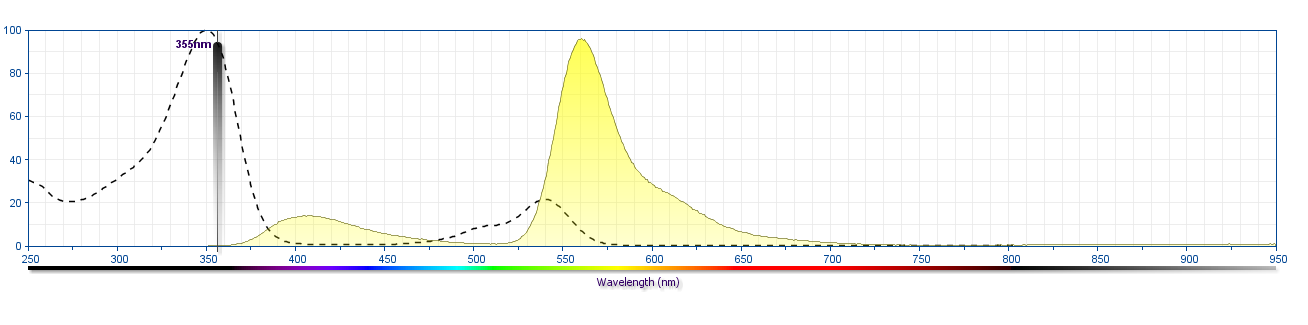
The antibody was conjugated to BD Horizon™ BUV563 which is part of the BD Horizon Brilliant™ Ultraviolet family of dyes. This dye is a tandem fluorochrome of BD Horizon BUV395 which has an Ex Max of 348 nm and an acceptor dye. The tandem has an Em Max at 563 nm. BD Horizon BUV563 can be excited by the 355 nm ultraviolet laser. On instruments with a 561 nm Yellow-Green laser, the recommended bandpass filter is 585/15 nm with a 535 nm long pass to minimize laser light leakage. When BD Horizon BUV563 is used with an instrument that does not have a 561 nm laser, a 560/40 nm filter with a 535 nm long pass may be more optimal. Due to the excitation and emission characteristics of the acceptor dye, there may be spillover into the PE and PE-CF594 detectors. However, the spillover can be corrected through compensation as with any other dye combination.