







Description
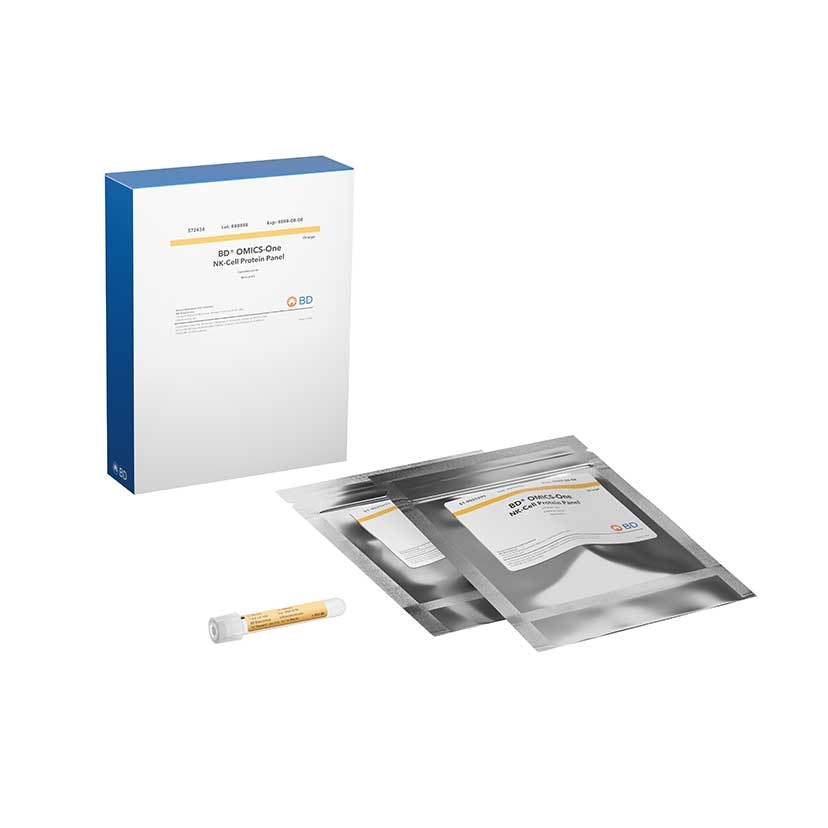
The BD® OMICS-One NK-Cell Protein Panel consists of 30 different specificities against major NK-Cell markers in a single tube. Designed and optimized to work on the BD Rhapsody™ System, the NK-Cell Protein Panel is tested to work seamlessly alongside the BD Rhapsody™ Whole Transcriptome Analysis (WTA) Assay, Targeted mRNA Assay, BD® Single-Cell Multiplexing Kit (SMK), BD® Intracellular CITE-seq (IC-AbSeq) Assay, and BD Rhapsody™ TCR/BCR Next Multiomic Assay for human. The individual antibodies were each conjugated to an oligonucleotide that contains a specific antibody barcode sequence flanked by a polyA tail on the 3' end and a common PCR handle (PCR primer binding site) on the 5' end. All AbSeq barcode sequences were generated in-silico with minimal sequence similarity to the human genomes, have low predicted secondary structure, and have high Hamming distance within the BD antibody-oligo portfolio, to allow for sequencing error correction and unique mapping. The polyA tail of the oligonucleotide allows the barcode sequence to be captured by BD Rhapsody™ Enhanced Cell Capture Beads. The 5' PCR handle allows for efficient library generation for various sequencing platforms. Each individual antibody exists at an optimal concentration within the 30-plex to enable superior target and population resolution.
The NK-Cell Protein Panel is designed with SMART technology. SMART technology helps lower sequencing cost while increasing data resolution by attenuating antibodies that target high-expressing primary markers and allowing reallocation of sequencing reads to markers expressed at lower levels. With SMART technology, markers low in expression can be quantified without having to do deeper sequencing and incurring high sequencing cost. The two specificities attenuated in the NK-Cell Protein Panel are CD2 and CD31.
Preparation And Storage


Recommended Assay Procedures
This reagent is provided lyophilized in a pre-titrated format.
1. Remove the BD® OMICS-One NK-Cell Protein Panel tube from the foil bag and bring up to room temperature for 5 minutes.
2. Make sure the pellet is located at the bottom of the tube. If not, briefly centrifuge to collect the contents at the tube bottom.
3. Add 35 µL of nuclease-free water to the bottom of the tube and allow antibodies to reconstitute for 5 minutes at room temperature.
4. Place the reconstituted antibodies on ice until the cells are ready for staining.
Note: Reconstitute antibody immediately before cell staining. Prolonged incubation of reconstituted antibody may increase
the non-specific background.
5. For BD® AbSeq Ab-Oligo drop-in of 60 plex or lower, prepare the BD® AbSeq labeling MasterMix in 1.5-mL LoBind tube on ice.
Note: For drop-in with more than 60 plex, reach out to technical support for calculation.
For sequential labeling with Sample Tags or no Sample Tags, prepare BD® AbSeq labeling MasterMix for drop-ins as follows:
____________________________________________________________________________________________
Component 1 sample (µL) 1 sample + 2 samples +
30% overage (µL) 30% overage (µL)
Per BD® AbSeq Ab-Oligo 2.0 2.6 5.2
Total of BD® AbSeq Ab-Oligo 2.0 × N* 2.6 × N 5.2 × N
FBS† (catalog number 554656) 70 – (2.0 x N) 91 – (2.6 x N) 182 – (5.2 x N)
Total 70 91 182
For co-labeling with Sample Tags, prepare BD® AbSeq labeling MasterMix for drop-ins as follows:
____________________________________________________________________________________________
Component 1 sample (µL) 1 sample + 2 samples +
30% overage (µL) 30% overage (µL)
Per BD® AbSeq Ab-Oligo 2.0 2.6 5.2
Total of BD® AbSeq Ab-Oligo 2.0 × N* 2.6 × N 5.2 × N
FBS† (catalog number 554656) 120 – (2.0 × N) 156 – (2.6 × N) 312 – (5.2 × N)
Total 120 156 312
* N = number of drop-in antibodies. N = 0 if there are no drop-in antibodies.
† FBS = BD Pharmingen™ Stain Buffer.
6. Pipet-mix the BD® AbSeq labeling MasterMix for drop-ins. Briefly centrifuge to collect the contents at the bottom, and place back on ice.
7. If sequential labeling with Sample Tags or no Sample Tags, for each sample, add 140 μL BD® AbSeq labeling MasterMix of drop-ins to the
tube containing 35 μL reconstituted NK-Cell Protein Panel solution to make a total volume of 175 μL.
If co-labeling with Sample Tags, for each sample, add 120 μL BD® AbSeq labeling MasterMix of drop-ins and 20 μL Sample Tag to the tube
containing 35 μL reconstituted NK-Cell Protein Panel solution to make a total volume of 175 μL.
8. Pipet-mix the mixture, briefly centrifuge to collect the contents at the tube bottom, and place back on ice.
9. Centrifuge cells at 400 × g for 5 minutes. If Fc Block is used, proceed to step 10. If Fc Block is not used. skip to step 11.
10. (Optional) For samples containing myeloid and B lymphocytes, we recommend blocking nonspecific Fc Receptor–mediated false-positive
signals with Human BD Fc Block (catalog number 564220).
a. To perform blocking, pipet the Fc Block MasterMix into a new 1.5-mL LoBind tube on ice:
_________________________________________________________________________________
Component 1 sample (µL)* 1 sample + 20% overage (µL)
FBS† (catalog number 554656) 20.0 24.0
Fc Block‡ (catalog number 564220) 5.0 6.0
Total 25.0 30.0
* Sufficient for up to 1 million cells. To block more cells, adjust the volume.
† FBS = BD Pharmingen™ Stain Buffer.
‡ Fc Block = BD Pharmingen™ Human BD Fc Block.
b. Pipet-mix the Fc Block MasterMix and briefly centrifuge. Place on ice.
c. Remove the supernatant from the cells without disturbing the pellet.
d. Resuspend the cells in 25 µL of Fc Block MasterMix.
e. Incubate the cells at room temperature (15°C to 25°C) for 10 minutes.
f. Add 175 µL of BD® AbSeq labeling MasterMix from Step 8 into the cell suspension. Pipet-mix and proceed to Step 12.
11. Remove the supernatant from the cells without disturbing the pellet. Add 25 µL Stain Buffer (FBS) to the 175 µL of BD® AbSeq labeling
MasterMix from Step 8 to make a total volume of 200 µL. Resuspend the cell pellet in 200 µL total volume. Pipet-mix.
12. Transfer the cells with BD® AbSeq labeling MasterMix into a new 5-mL polystyrene Falcon tube.
13. Stain the cells on ice for 30 minutes.
14. Add 3–4 mL Stain Buffer (FBS) to labelled cells and pipet-mix.
15. Centrifuge at 400 x g for 5 minutes.
16. Uncap the tube and invert to decant supernatant into biohazardous waste. Keep the tube inverted and gently blot on a lint-free wiper to
remove residual supernatant from tube rim.
17. Repeat steps 14–16 twice more for a total of three washes.
18. Resuspend the final washed cell pellet in 620 µL cold Sample Buffer from the BD Rhapsody™ Enhanced Cartridge Reagent V3
(catalog number 667052) and proceed to single cell capture with on-cartridge washing described in substeps a–c. Refer to the
BD Rhapsody™ HT Single-Cell Analysis System Single-Cell Capture and cDNA Synthesis Protocol (Doc ID 23-24252) or BD Rhapsody™
HT Xpress System Single-Cell Capture and cDNA Synthesis Protocol (Doc ID 23-24253) for additional details.
Note: Perform on-cartridge washing after cell settling (8 minute incubation) as follows:
a. At the protocol section of "Loading cells in BD Rhapsody™ 8-Lane Cartridge", after cell load, incubate the cartridge in the dark
at room temperature for 8 minutes.
b. Place the cartridge on the BD Rhapsody™ HT Xpress and perform the On-Cartridge Wash steps listed as follows:
_____________________________________________________________
Material to load Volume (µL) 1 lane Pipette Mode
Air 380 Prime/Wash
Cold Sample Buffer 380 Prime/Wash
Air 380 Prime/Wash
Cold Sample Buffer 380 Prime/Wash
c. (Optional) Perform the scanner step: Cell Load Scan, if using BD Rhapsody™ HT Single-Cell Analysis System Single-Cell
Capture and cDNA Synthesis Protocol (Doc ID 23-24252). No need for 8-minute delay before scanning.
Warning: All biological specimens and materials are considered biohazardous. Handle as if capable of transmitting infection and dispose using proper precautions in accordance with federal, state, and local regulations. Never pipette by mouth. Wear suitable protective clothing, eyewear, and gloves.
List of all 30 Human AbSeq specificities included in the BD® OMICS-One T-Cell panel:
_____________________________________________________________________________
Specificity Clone Oligo ID BD® AbSeq Barcode Sequence
CD11b M1/70 AHS0005 ATCGTTATTCGTTGTAGTTCGCCCGGTTTGAGTAGT
CD56 NCAM16.2 AHS0019 AGAGGTTGAGTCGTAATAATAATCGGAAGGCGTTGG
CD38 HIT2 AHS0022 GTCAACGATGGGTAGCGGTAGAAATAACGGAACTGG
CD27 M-T271 AHS0025 TGTCCGGTTTAGCGAATTGGGTTGAGTCACGTAGGT
CD2 RPA-2.10 AHS0029 AAACGTAGATTAGAGCCGGGTATGTCGCAACTGATT
CD16 3G8 AHS0053 TAAATCTAATCGCGGTAACATAACGGTGGGTAAGGT
CD184 (CXCR4) 12G5 AHS0060 CAGTGTTTAGAGCGGGTTGCATATGTCGTTTAGAGG
CD49d 9F10 AHS0063 TAGGGTGACTTAGCGATTGATGCGTATGTTTGGGCG
CD314 (NKG2D) 1D11 AHS0065 TTGAAATGCGATGAGACGTAGAGCGATGTAGGTAGC
CD335 (NKP46) 9E2/NKP46 AHS0068 CAATTTGTTCGCGTTTAGTAGTCGTCGTCTTATGGG
CD54 HA58 AHS0076 AAGAGAATATATGCGTGCGTTGTTAAGGGAATGCGT
CD226 DX11 AHS0079 GAGTTTATGATTCGTTTCTTCGGTAGTTCGTCGCTT
CD94 HP-3D9 AHS0085 GAGGTTAGGATAGGTGTACGGGTCGAGTTGAATTCT
CD336 (NKP44) p44-8 AHS0090 AATGCAAACGATATCACGAAGGGTAGTACACGACGG
CD49a SR84 AHS0101 ATGACACGAATGCGACGAGAGGCGAAATAGGTTGGT
CX3CR1 2A9-1 AHS0125 GGGTTCACGAGGTTTAAAGCGGTAGTATAGGATGCC
CD122 Mik-β3 AHS0146 TTAAAGAGATTCGTGGGTATTGGCGCAGTCATTCCT
CD140b (PDGFR) 28D4 AHS0151 GACAACATTTAGGACGTGACGAGAGAGTATAGCTTC
CD248 B1/35 AHS0156 ATCACTTATTTCGTTTGGAGGGTTCGTAGGCGTTGC
CD63 H5C6 AHS0157 TGCAGCGTTAGGACCAAGCGTTTACCGTAGAATATT
CD140a α-R1 AHS0160 TTACTGACTTTCGGACGTTGGTTACTTAGGGTTATG
CD31 (PECAM1) WM59 AHS0170 CTAAGGGACGTAATTGAGTTTCGGTGATCGCAGTTT
CD96 6F9 AHS0194 CTAATGTAAGAGCGGACGTTTGGGCACTATATGTTT
CD161 (KLRB1) HP-3G10 AHS0205 TTTAGGACGATTAGTTGTGCGGCATAGGAGGTGTTC
CD158b (KIR) DX27 AHS0209 CGTAGGAGGATTTCGTCGATGGGTTTGTTAGCGTTC
CD158e1 DX9 AHS0211 AGGTTCATTGCGGCATTAGGCGTCATATAGTAGGTG
CD337/NKp30 P30-15 AHS0213 GGTAACTGACATGACGGAGCGATAATTTCTGGCGGT
CD3 UCHT1 AHS0231 AGCTAGGTGTTATCGGCAAGTTGTACGGTGAAGTCG
CD329(Siglec-9) E10-286 AHS0239 CGGGCGCGAAGATAGGATAATAGGTAACGTCAAATG
CD106 51-10C9 AHS0251 TCTGATTTAGCGGGTGGACGTATTATAGTGATTGGC
Product Notices
- This reagent is provided lyophilized in a pre-titrated format.
- The production process underwent stringent testing and validation to assure that it generates a high-quality conjugate with consistent performance and specific binding activity. However, verification testing has not been performed on all conjugate lots.
- Go to https://www.bdbiosciences.com/en-us/resources/protocols/single-cell-multiomics for technical protocols.
- Go to https://abseq-ref-gen.genomics.bd.com/to access AbSeq reference files in FASTA format for bioinformatics analyses.
- Caution: Sodium azide yields highly toxic hydrazoic acid under acidic conditions. Dilute azide compounds in running water before discarding to avoid accumulation of potentially explosive deposits in plumbing. Follow state and local guidelines when disposing of hazardous waste.
- Source of all serum proteins is from USDA inspected abattoirs located in the United States.
- For U.S. patents that may apply, see bd.com/patents.
- Read and understand the safety data sheets (SDSs) before handling chemicals.To obtain SDSs, go to regdocs.bd.com or contact BD Biosciences technical support at scomix@bd.com.
| Description | Quantity/Size | Part Number | EntrezGene ID |
|---|---|---|---|
| N/A | 1.0 | N/A | N/A |
Please refer to Support Documents for Quality Certificates
Global - Refer to manufacturer's instructions for use and related User Manuals and Technical data sheets before using this products as described
Comparisons, where applicable, are made against older BD Technology, manual methods or are general performance claims. Comparisons are not made against non-BD technologies, unless otherwise noted.
For Research Use Only. Not for use in diagnostic or therapeutic procedures.