





.png)


Preparation And Storage


Product Notices
- Since applications vary, each investigator should titrate the reagent to obtain optimal results.
- Please refer to www.bdbiosciences.com/us/s/resources for technical protocols.
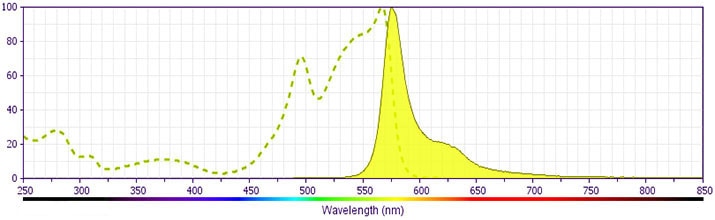
- For fluorochrome spectra and suitable instrument settings, please refer to our Multicolor Flow Cytometry web page at www.bdbiosciences.com/colors.
- Caution: Sodium azide yields highly toxic hydrazoic acid under acidic conditions. Dilute azide compounds in running water before discarding to avoid accumulation of potentially explosive deposits in plumbing.
Companion Products
.png?imwidth=320)
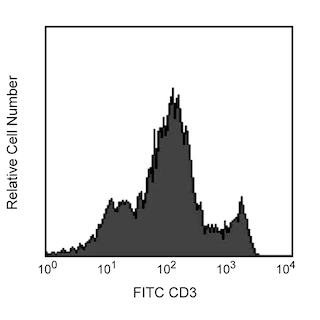
CD90 (Thy-1) is a GPI-anchored membrane glycoprotein of the Ig superfamily which is involved in signal transduction. The OX-7 monoclonal antibody specifically binds to rat CD90 reported to be expressed by hematopoietic stem cells, early myeloid and erythroid cells, immature B lymphocytes in the bone marrow and peripheral lymphoid organs, thymocytes, recent thymic emigrants (a subset of CD45RC- peripheral T lymphocytes), neurons, glomerular mesangial cells, endothelium at inflammatory sites, mast cells, and dendritic cells. Rat dendritic epidermal T cells (DEC) have been reported to be CD90 (Thy-1) negative, unlike those of the mouse.
The OX-7 clone has been reported to crossreact with the mouse CD90.1 (Thy-1.1) alloantigen of the AKR/J and PL strains, but not CD90.2 (Thy-1.2) found on many mouse strains. In the mouse, CD90 is found on thymocytes, most peripheral T lymphocytes, some intraepithelial T lymphocytes (IEL, DEC), hematopoietic stem cells, and neurons, but not B lymphocytes. In addition, there is evidence that CD90 mediates adhesion of mouse thymocytes to mouse thymic stroma. The OX-7 clone has also been reported to crossreact with rabbit and guinea pig thymus, brain, and intestine.
This antibody is routinely tested by flow cytometric analysis. Other applications were tested at BD Biosciences Pharmingen during antibody development only or reported in the literature.
Development References (18)
-
Bañuls MP, Alvarez A, Ferrero I, Zapata A, Ardavin C. Cell-surface marker analysis of rat thymic dendritic cells. Immunology. 1993; 79(2):298-304. (Biology). View Reference
-
Campbell DG, Gagnon J, Reid KB, Williams AF. Rat brain Thy-1 glycoprotein. The amino acid sequence, disulphide bonds and an unusual hydrophobic region. Biochem J. 1981; 195(1):15-30. (Biology). View Reference
-
Chen-Woan M, Delaney CP, Fournier V, et al. In vitro characterization of rat bone marrow-derived dendritic cells and their precursors. J Leukoc Biol. 1996; 59(2):196-207. (Biology). View Reference
-
Crook K and Hunt SV. Enrichment of early fetal-liver hemopoietic stem cells of the rat using monoclonal antibodies against the transferrin receptor, Thy-1, and MRC-OX82. Dev Immunol. 1996; 4:235-246. (Biology). View Reference
-
Dráberová L, Amoui M, and Dráber P. Thy-1-mediated activation of rat mast cells: the role of Thy-1 membrane microdomains. Immunology. 1996; 87(1):141-148. (Clone-specific: Activation, Western blot). View Reference
-
Elbe A, Kilgus O, Hünig T, and Stingl G. T-cell receptor diversity in dendritic epidermal T cells in the rat. J Invest Dermatol. 1993; 102:74-79. (Biology). View Reference
-
Ferrero I, Bañnuls M, Alvarez A, Ardavín C. Rat thymic dendritic cells: cell surface marker variations in culture. Immunol Lett. 1993; 37(2-3):241-247. (Biology). View Reference
-
Garnett D, Barclay AN, Carmo AM, Beyers AD. The association of the protein tyrosine kinases p56lck and p60fyn with the glycosyl phosphatidylinositol-anchored proteins Thy-1 and CD48 in rat thymocytes is dependent on the state of cellular activation. Eur J Immunol. 1993; 23(10):2540-2544. (Clone-specific: Immunoprecipitation). View Reference
-
He HT, Naquet P, Caillol D, Pierres M. Thy-1 supports adhesion of mouse thymocytes to thymic epithelial cells through a Ca2(+)-independent mechanism. J Exp Med. 1991; 173(2):515-518. (Biology). View Reference
-
Hermans MH, Opstelten D. In situ visualization of hemopoietic cell subsets and stromal elements in rat and mouse bone marrow by immunostaining of frozen sections. J Histochem Cytochem. 1991; 39(12):1627-1634. (Clone-specific: Immunohistochemistry). View Reference
-
Hosseinzadeh H, Goldschneider I. Recent thymic emigrants in the rat express a unique antigenic phenotype and undergo post-thymic maturation in peripheral lymphoid tissues. J Immunol. 1993; 150(5):1670-1679. (Biology). View Reference
-
Ishizu A, Ishikura H, Nakamaru Y et al. Thy-1 induced on rat endothelium regulates vascular permeability at sites of inflammation. Int Immunol. 1995; 7:1939-1947. (Clone-specific: Immunoprecipitation). View Reference
-
Kawachi H, Orikasa M, Matsui K, et al. Epitope-specific induction of mesangial lesions with proteinuria by a MoAb against mesangial cell surface antigen. Clin Exp Immunol. 1992; 88(3):399-404. (Clone-specific: Western blot). View Reference
-
Liu L, Zhang M, Jenkins C, MacPherson GG. Dendritic cell heterogeneity in vivo: two functionally different dendritic cell populations in rat intestinal lymph can be distinguished by CD4 expression. J Immunol. 1998; 161(3):1146-1155. (Biology). View Reference
-
Mason DW, Williams AF. The kinetics of antibody binding to membrane antigens in solution and at the cell surface. Biochem J. 1980; 187(1):1-20. (Immunogen). View Reference
-
Nakashima I, Zhang YH, Rahman SM, et al. Evidence of synergy between Thy-1 and CD3/TCR complex in signal delivery to murine thymocytes for cell death. J Immunol. 1991; 147(4):1153-1162. (Biology: Activation). View Reference
-
Paul LC, Rennke HG, Milford EL, and Carpenter CB. Thy-1.1 in glomeruli of rat kidneys. Kidney Int. 1984; 25:771-777. (Clone-specific: Electron microscopy, Immunohistochemistry). View Reference
-
Payer E, Elbe A, Stingl G. Circulating CD3+/T cell receptor V gamma 3+ fetal murine thymocytes home to the skin and give rise to proliferating dendritic epidermal T cells. J Immunol. 1991; 146(8):2536-2543. (Biology). View Reference
Please refer to Support Documents for Quality Certificates
Global - Refer to manufacturer's instructions for use and related User Manuals and Technical data sheets before using this products as described
Comparisons, where applicable, are made against older BD Technology, manual methods or are general performance claims. Comparisons are not made against non-BD technologies, unless otherwise noted.
For Research Use Only. Not for use in diagnostic or therapeutic procedures.
