





Preparation And Storage
The monoclonal antibody is supplied as 200 µg purified immunoglobulin in 0.2 mL (1.0 mg/mL) of phosphate-buffered saline (PBS) containing 0.01% sodium azide without gelatin. The PE conjugate is supplied as 1.6 µg in 1.0 mL (1.6 µg/mL) of PBS containing gelatin and 0.1% sodium azide. Vials should be stored at 2° to 8°C. Conjugated forms should not be frozen and should be protected from prolonged exposure to light. Each reagent is stable for the period shown on the bottle label when stored as directed.


CD49d (Anti–VLA-α4), clone L25, is derived from the fusion of mouse Sp2/0 cells with popliteal lymph node cells from a BALB/c mouse immunized with a CD8+ T-cell line. CD49d (Anti–VLA-α4) recognizes the 150-kilodalton (kd) α chain of very-late antigen (VLA)-4, a member of the integrin family of cell adhesion molecules. VLA-4, like other integrins, is a noncovalently associated heterodimeric glycoprotein composed of α and β subunits and is involved in cell–cell and cell–extracellular matrix interactions. The β chain of the VLA-4 complex is the CD29 antigen, a 130-kd glycoprotein. The CD29 antigen, also known as the β1 subunit, is common to the VLA family of integrins. When acting as a matrix receptor, the CD49d antigen binds to CS-1, an alternatively spliced domain of fibronectin. When functioning as a cell receptor, the CD49d antigen binds to the vascular cell-adhesion molecule-1 (VCAM-1). The interaction between the CD49d antigen and VCAM-1 is known to play an important role in stabilizing the adhesion of lymphocytes to endothelial cells and in mediating B-lymphocyte precursor/bone marrow stromal cell adhesion. The CD49d antigen, when associated with the β7 integrin, forms a lymphocyte homing receptor for Peyer's patch, binding to the mucosal vascular addressin MAdCAM-1. The CD49d antigen is also involved in CD3-dependent CD4+T-lymphocyte activation via its interaction with fibronectin.
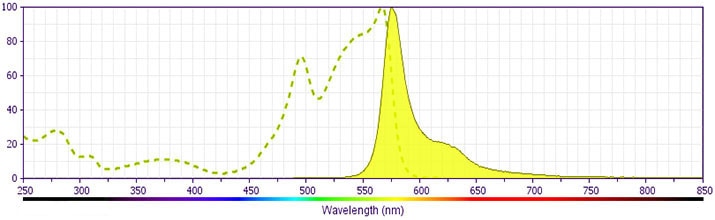
Development References (22)
-
Albelda SM, Buck CA. Integrins and other cell adhesion molecules.. FASEB J. 1990; 4(11):2868-80. (Biology). View Reference
-
Berlin C, Berg EL, Briskin MJ, et al. Alpha 4 beta 7 integrin mediates lymphocyte binding to the mucosal vascular addressin MAdCAM-1. Cell. 1993; 74(1):185-195. (Biology). View Reference
-
Clayberger C, Krensky AM, McIntyre BW, et al. Identification and characterization of two novel lymphocyte function-associated antigens, L24 and L25.. J Immunol. 1987; 138(5):1510-4. (Biology). View Reference
-
Davis LS, Oppenheimer-Marks N, Bednarczyk JL, McIntyre BW, Lipsky PE. Fibronectin promotes proliferation of naive and memory T cells by signaling through both the VLA-4 and VLA-5 integrin molecules.. J Immunol. 1990; 145(3):785-93. (Biology). View Reference
-
Dittel BN, McCarthy JB, Wayner EA, LeBien TW. Regulation of human B-cell precursor adhesion to bone marrow stromal cells by cytokines that exert opposing effects on the expression of vascular cell adhesion molecule-1 (VCAM-1).. Blood. 1993; 81(9):2272-82. (Biology). View Reference
-
Elices MJ, Osborn L, Takada Y, et al. VCAM-1 on activated endothelium interacts with the leukocyte integrin VLA-4 at a site distinct from the VLA-4/fibronectin binding site.. Cell. 1990; 60(4):577-84. (Biology). View Reference
-
Hemler ME, Kassner P, Bodorova J. Schlossman SF, Boumsell L, Gilks W, et al, ed. Leucocyte Typing V: White Cell Differentiation Antigens. New York, NY: Oxford University Press; 1995:1617-1618.
-
Lin Y, Kirby JA, Browell DA, et al. Renal allograft rejection: expression and function of VCAM-1 on tubular epithelial cells.. Clin Exp Immunol. 1993; 92(1):145-51. (Biology). View Reference
-
Maino VC, Picker LJ. Identification of functional subsets by flow cytometry: intracellular detection of cytokine expression.. Cytometry. 1998; 34(5):207-15. (Biology). View Reference
-
Maino VC. Rapid assessment of antigen induced cytokine expression in memory T cells by flow cytometry.. Vet Immunol Immunopathol. 1998; 63(1-2):199-207. (Biology). View Reference
-
Modderman PW. Knapp W, Dörken B, Gilks WR, et al, ed. Leucocyte Typing IV: White Cell Differentiation Antigens. New York, NY: Oxford University Press; 1989:1017-1019.
-
Nojima Y, Humphries MJ, Mould AP, et al. VLA-4 mediates CD3-dependent CD4+ T cell activation via the CS1 alternatively spliced domain of fibronectin.. J Exp Med. 1990; 172(4):1185-92. (Biology). View Reference
-
Pitcher CJ, Quittner C, Peterson DM, et al. HIV-1-specific CD4+ T cells are detectable in most individuals with active HIV-1 infection, but decline with prolonged viral suppression.. Nat Med. 1999; 5(5):518-25. (Biology). View Reference
-
Rice GE, Bevilacqua MP. An inducible endothelial cell surface glycoprotein mediates melanoma adhesion. Science. 1989; 246(4935):1303-1306. (Biology). View Reference
-
Rotteveel FT, Kokkelink I, van Lier RA, et al. Clonal analysis of functionally distinct human CD4+ T cell subsets. J Exp Med. 1988; 168(5):1659-1673. (Biology). View Reference
-
Shimizu Y, Newman W, Gopal TV, et al. Four molecular pathways of T cell adhesion to endothelial cells: roles of LFA-1, VCAM-1, and ELAM-1 and changes in pathway hierarchy under different activation conditions.. J Cell Biol. 1991; 113(5):1203-12. (Biology). View Reference
-
Shimizu Y, van Seventer GA, Horgan KJ, Shaw S. Costimulation of proliferative responses of resting CD4+ T cells by the interaction of VLA-4 and VLA-5 with fibronectin or VLA-6 with laminin.. J Immunol. 1990; 145(1):59-67. (Biology). View Reference
-
Springer TA. Adhesion receptors of the immune system. Nature. 1990; 346(6283):425-434. (Biology). View Reference
-
Suni MA, Picker LJ, Maino VC. Detection of antigen-specific T cell cytokine expression in whole blood by flow cytometry.. J Immunol Methods. 1998; 212(1):89-98. (Biology). View Reference
-
Taichman DB, Cybulsky MI, Djaffar I, et al. Tumor cell surface alpha 4 beta 1 integrin mediates adhesion to vascular endothelium: demonstration of an interaction with the N-terminal domains of INCAM-110/VCAM-1. Cell Regul. 1991; 2(5):347-355. (Biology). View Reference
-
Udagawa T, McIntyre BW. A VLA-4 alpha-chain specific monoclonal antibody enhances CD3-induced IL-2/IL-2 receptor-dependent T-cell proliferation.. Lymphokine Cytokine Res. 1992; 11(5):193-9. (Biology). View Reference
-
Waldrop SL, Davis KA, Maino VC, Picker LJ. Normal human CD4+ memory T cells display broad heterogeneity in their activation threshold for cytokine synthesis.. J Immunol. 1998; 161(10):5284-95. (Biology). View Reference
Please refer to Support Documents for Quality Certificates
Global - Refer to manufacturer's instructions for use and related User Manuals and Technical data sheets before using this products as described
Comparisons, where applicable, are made against older BD Technology, manual methods or are general performance claims. Comparisons are not made against non-BD technologies, unless otherwise noted.
For Research Use Only. Not for use in diagnostic or therapeutic procedures.
Although not required, these products are manufactured in accordance with Good Manufacturing Practices.
